I Took My Son to Kenya. Together, We Met My Younger Self.
By Melinda Kramer, Women's Earth Alliance Co-Founder, Co-Executive Director
There is a particular feeling that comes from returning to the place that made you who you are, twenty-six years later, with your own child beside you. I felt it the moment we landed in Nairobi. The last light of sun struck the runway exactly as I remembered it from the first time I arrived. For a brief moment, I was twenty years old again, a University of Nairobi anthropology student arriving with more questions than answers, barely able to imagine that this country would quietly shape the rest of my life.
Beside me, my 14-year-old son, Dune, had his face pressed to the plane window. This was his first time leaving the North American continent, just as my first trip to Kenya had been mine.
Before we left California, I told him this trip was a learning journey. We were returning to the place where my own path began. He would spend time with my colleagues, Rose Wamalwa and Teresa Muthoni, the remarkable women leading Women’s Earth Alliance programs in sub-Saharan Africa. He would visit communities where WEA is working and meet some of the mentors whose leadership helped shape my own.
More than anything, I wanted him to see the roots of Women’s Earth Alliance, my first baby.
I wanted him to walk back through time with me to the place where I first encountered the pieces of WEA before I knew how they fit together: women’s leadership, care for the earth, cultural wisdom, community resilience, and the transformation that occurs when women have the resources to lead. I wanted him to see what twenty years of dedication looks like when that dedication is nurtured, held by many hands, and given time to grow.
Homework Before the Journey

Before we left for Kenya, I gave Dune an unusual assignment.
I handed him five dusty field journals I had kept when I first lived in East Africa as an anthropology student. Their pages held my earliest experiences living in Nairobi and attending the University of Nairobi, staying with families in communities across Kenya and Tanzania, and beginning my first internship with CARE Kenya. They were filled with observations scribbled in the margins, hand-drawn maps, conversations with elders, reflections that wandered across the page, and traces of red earth that had settled into the paper decades earlier.
He read about my time living with a family in rural Meru, where I experienced a depth of generosity and community that changed my understanding of how people care for one another. He read about long conversations with Samburu elders whose respect for land, animals, and culture stretched back through generations. He read about wandering the narrow streets of Lamu, where Swahili culture has flourished for centuries. He read about camping among the baobab trees in the Yaeda Valley alongside the Hadza, one of the world’s last immediate-return hunter-gatherer societies.
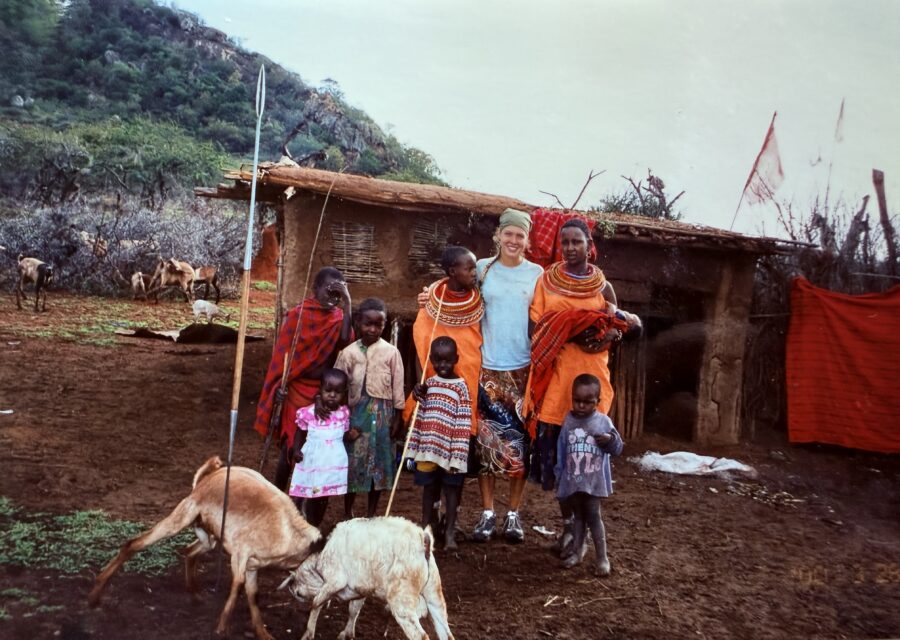
Sometimes I would look over his shoulder while he read, watching him meet a version of me he had never known: a young woman still deciding who she was going to become.
At one point, he excitedly pointed to a page where I had mapped out my coursework and internship plans. Right there, in my own handwriting, we could see the thought taking shape. I was describing my growing fascination with the relationship between culture, environmental stewardship, and the leadership of women in communities around the world.
He looked up, smiling.
“Mom,” he said, “that’s Women’s Earth Alliance.”
He was right. He had found it before I had.
The exact seed was there, still in the soil, nearly thirty years before it had form.
Returning to the Roots
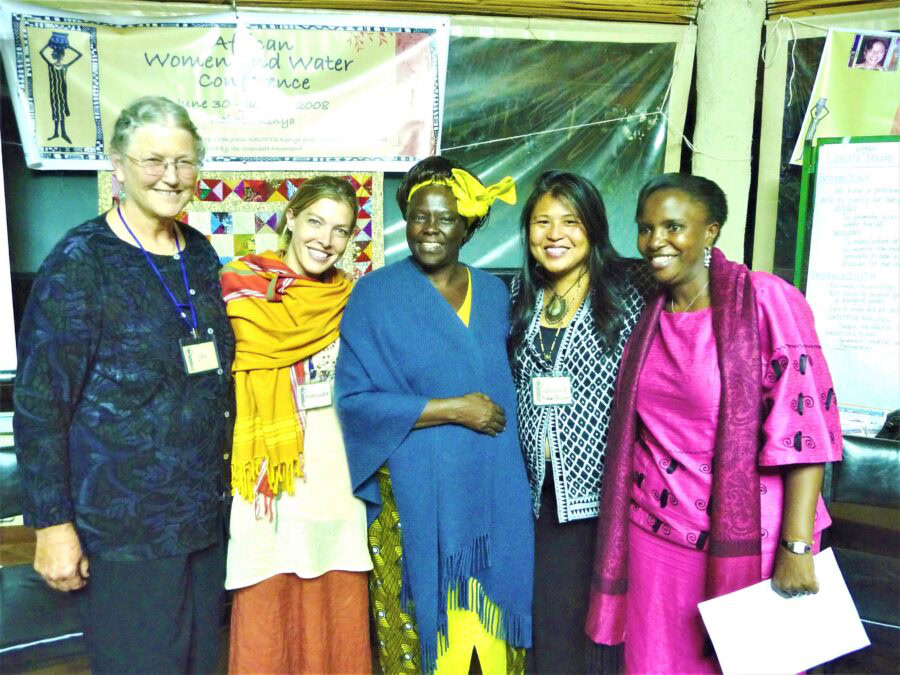
2008, Greenbelt Movement Training Center
We visited with my dear friend, Nyaguthii Chege, Board Chair of the Green Belt Movement, who grew up alongside Dr. Wangari Maathai’s family and continues to carry that extraordinary legacy forward. Joining us was Wanjira Mathai, Wangari’s daughter, whose own leadership now spans the globe through restoration initiatives rooted in her mother’s vision.
I remember first meeting Dr. Wangari Maathai in 2000, when she came as a guest lecturer to one of my classes at the University of Nairobi, years before she won the Nobel Peace Prize. After class ended, I walked up to thank her for her leadership.
At the end of our conversation, she smiled radiantly and said something I have carried ever since:
“What we need to do is simple. Just plant seeds. Seeds of all kinds. You will be amazed at how they grow.”
At the time, I thought she was talking about trees. She had, after all, begun a worldwide tree-planting movement.
Years later, after Women's Earth Alliance was underway and she had hosted one of our first women’s environmental training programs at the Green Belt Movement Training Center, I understood that she was also talking about possibility. About the ripple effect of investing in women whose leadership spreads outward through families, communities, and generations.
Being with Nyaguthii and Wanjira all these years later, with Dune listening closely beside me, I felt how deeply Wangari’s vision had shaped the ground where WEA first took root.
Now my son was standing on that same ground.
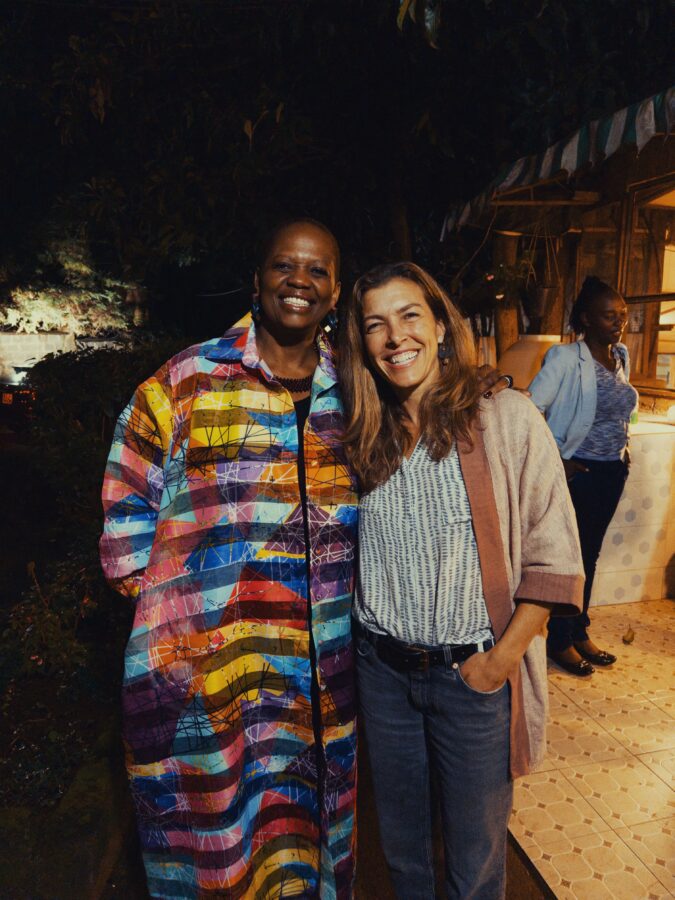
Wanjira Mathai and Melinda Kramer
Seeing Kenya Through New Eyes
The days that followed felt like time folding gently back on itself.
I was retracing a journey that had changed my life, and this time I was watching my son discover it for the first time.
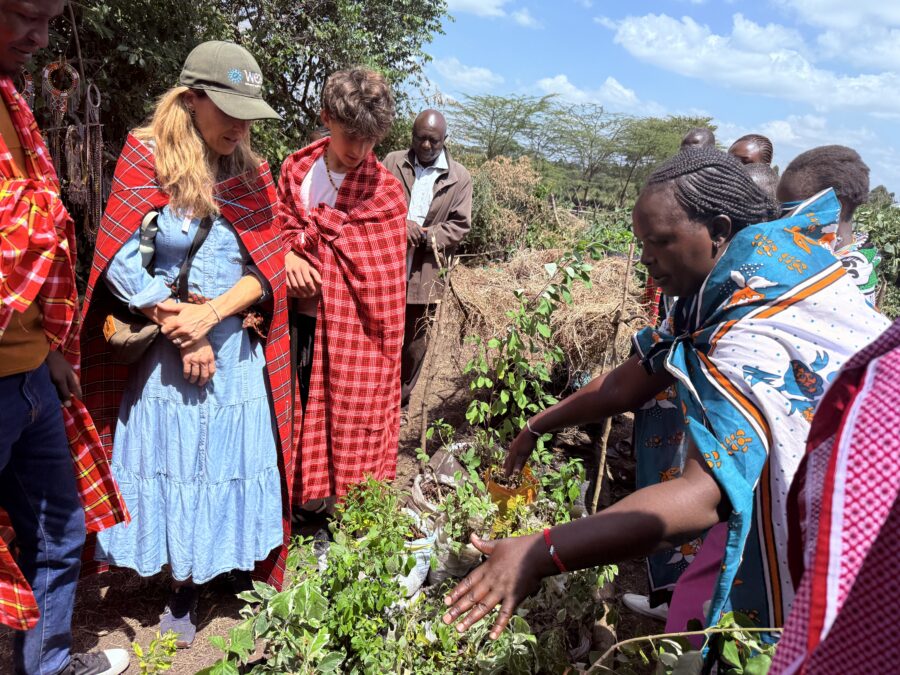
We visited Narok with Rose and Teresa, one of the regions where WEA women have been leading work to restore native trees, grow food, harvest rainwater, and strengthen local livelihoods. We were welcomed with exuberant songs, and together we danced our way into the village. Women wrapped Dune in brilliant Maasai blankets and draped hand-beaded necklaces around his neck. Young men greeted him warmly and gifted him a hand-carved staff. Children smiled up at him and waved shyly. Within minutes, he belonged.

WEA Leader, Lormeshuki Chesengei greeted us and took us to the center of the village, where she began sharing her story. Years earlier, Lormeshuki had joined a Women’s Earth Alliance training led by WEA East Africa Director Rose Wamalwa. Today, Lormeshuki leads thriving tree nurseries, operates successful beadwork enterprises, has restored more than 1,500 native trees, and funds her children’s education through her own work. She has also become a trainer, guiding other women in her community to step into leadership as she has.
The women showed us, with great pride, the native tree species growing in their nurseries. They walked us through vegetable gardens and medicinal herb plots, naming each plant and explaining how they were feeding families, restoring soil, and supporting health in the community. We cheered as clean, cool water poured from the spigot of Lormeshuki’s household ferro cement tank and rainwater harvesting system she had built.

WEA leader, Lormeshuki Chesengei in Narok, Kenya
Dune met teenagers close to his own age who had started youth tree-planting groups, following in their mothers’ footsteps as they restored the landscapes where they live.
The women spoke proudly about the income they are earning and reinvesting in their families. They talked about school fees they could now pay themselves to secure their children’s education.
We also heard from Jackson, Lormeshuki’s husband, who spoke openly and proudly about his wife’s leadership and the women’s group that has helped transform the community. He talked about why men need to support women’s leadership and how doing so has changed his own family and influenced others around him. Other men, he told us, have begun following his example, encouraging women to manage land, lead restoration efforts, build businesses, and participate in community decisions.

The village chief also offered words of support. Young people stood all around us, listening intently.
I watched Dune take it in: Jackson speaking with pride, the chief affirming the women’s leadership, the young men and boys standing close enough to hear every word.
We were invited inside Lormeshuki’s home, which she had built by hand, as Maasai women in her community have done for generations. There, we shared a home-cooked meal with her husband, her family, and neighbors who drifted in and out to visit.
Through the open door, her tree nursery was in view. Her vegetables flourished despite the dry landscape. Children ran between the gardens. Everything around us carried the imprint of her leadership.
A Vast Sky
From Narok, we continued to Maji Moto to visit my longtime friend Salaton Ole Ntutu, a visionary Maasai chief, and spiritual leader, who founded Maji Moto Maasai Cultural Camp in honor of his mother.
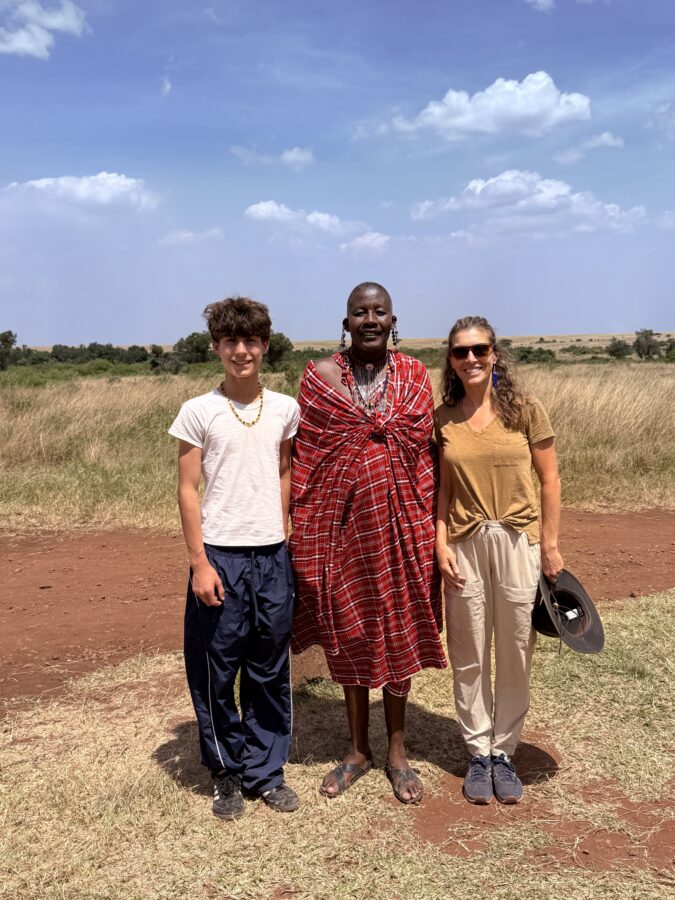
In the Maasai Mara with Salaton Ole Ntutu
For more than 20 years, he and his wife, Susan, have guided the camp as a place where cultural knowledge is shared on Maasai terms and tourism revenue supports local community projects, including primary schools and support for women's empowerment.
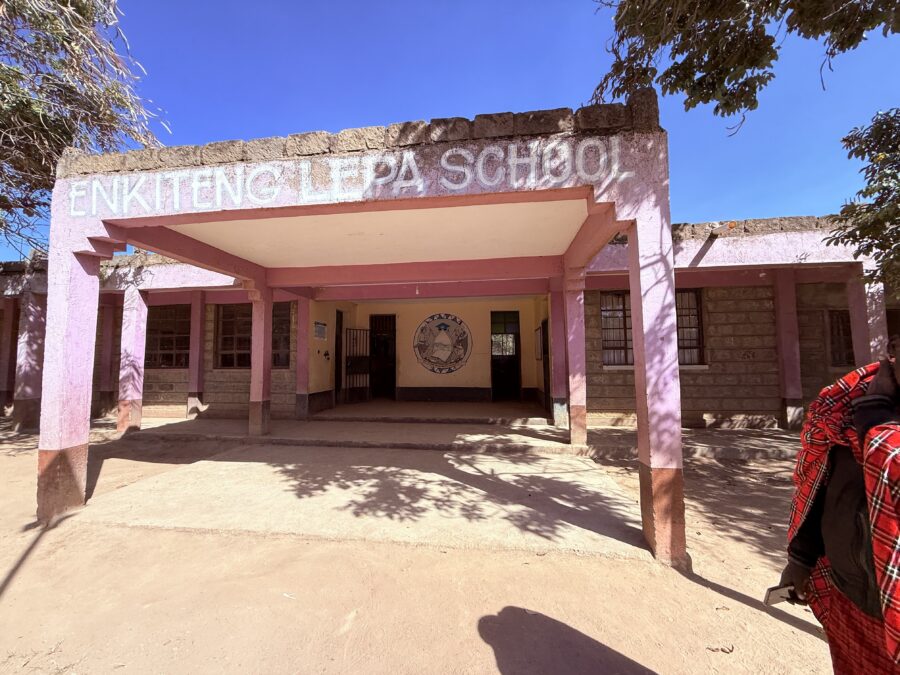
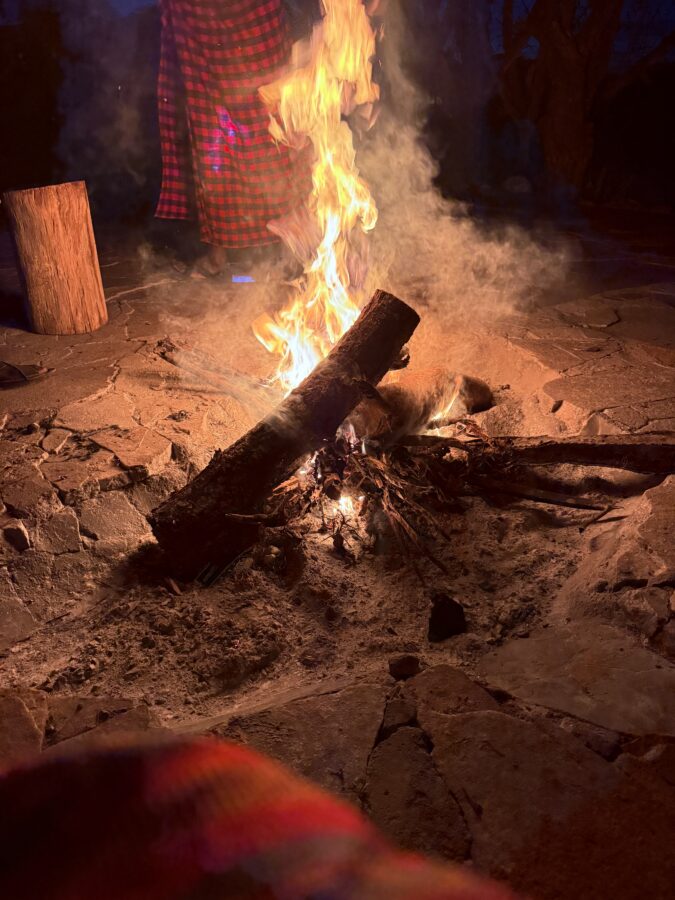
Back at the camp, the Moran, young Maasai warriors, taught Dune their traditional fire-making techniques. They taught us songs about courage, responsibility, and caring for the land that sustains us.
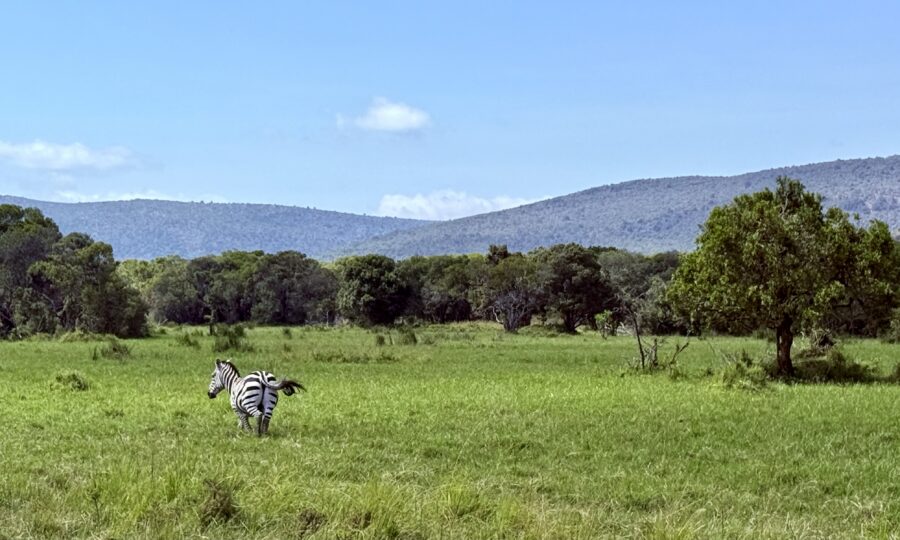
The next day, Salaton took us across his homeland, the wide-open Maasai Mara. Crocodiles and hippos, lions and leopards, elephants and zebra, wildebeest and ostriches scattered the horizon. The land's staggering expanse still rearranged my sense of scale: how small I was, how vast everything else.
Before we left, they gave Dune a rungu, a wooden club traditionally carried as a symbol of readiness to protect family, livestock, and community. The gift was heavy in his hands, and I could see that he was ready to hold it and all that it signified.
I found myself constantly looking up at the African sky, twenty-six years after my first time beneath it, taking in its dizzying vastness.
This time, it was stretching my son, too.
The Journey Home
On our flight home, I asked Dune what he would remember most.
I expected him to say the elephants, the giraffes, or perhaps the leopard.
He answered without hesitation.
“Lormeshuki’s village.”
He talked about the gardens. The healthy trees. The young men following in their mothers’ footsteps. The home-cooked meal. The unparalleled generosity they had shown him. He talked about people caring for one another, and women building things so their neighbors could have a better life.
Hours later, somewhere over the Arctic, we looked down together as sunlight caught the snow-covered mountains below us.
“Mom,” he said quietly,“the world is so beautiful. I hope it stays this way.”
I wondered whether he understood, in that moment, that he was sitting inside the answer to his own hope. The work does exist. It is beautiful. It is being carried by the hands he had just shaken, in the gardens he had walked through, in the tree saplings he had seen reaching upward, and in the women whose leadership had shifted something in him.
I thought about the rungu placed in his hands at Maji Moto, and the responsibility it represented: to protect family, community, land, and all that makes life possible.
I thought about the women we had just left. About their sons learning that strength includes caring for the earth and standing beside the women who lead their communities. About seedlings taking root in the soil of this work.
Twenty-six years ago, Kenya planted something in me that eventually grew into Women’s Earth Alliance.
This summer, I watched new seeds being planted in my son.
Dr. Wangari Maathai was right.
Planting these seeds is the most important work we can do.